
100+ years
250 ha
4M liters
9 countries
About Us
Our commitment to quality has been the key to the development of our winery. With more than 100 years of history dedicated to producing top–tier varietal wines and selling them in bulk.
Cruz de Triana —a name that evokes the founding of the city of Rancagua in 1743— is a family-owned company located in the heart of Chile’s Central Valley, in the Cachapoal and Colchagua provinces of the VI Region, a privileged area for crafting wines of great intensity.
We have more than 250 hectares, mostly dedicated to the production and vinification of our own grapes and wines.
Manifesto
Cruz de Triana Winery has always stood out for its commitment to innovation, constantly seeking new technologies to ensure continuous improvement in the quality of its wines. We were pioneers in Chile in wine exports, as well as in the adoption of stainless steel, pneumatic presses, and fermentation temperature control back in the 1980s.
History
The Salaya family has been dedicated uninterruptedly to wine production since the early 20th century, beginning with the arrival of Germán Salaya Martínez de Suazo in Chile. Since then, three generations have carried on the tradition to this day, capturing the essence of what it means to craft a quality wine.
WINERY & VINEYARDS
Winery
Located in the town of Graneros, just a few kilometers from downtown Rancagua, you will find our Cruz de Triana winery and cellar, which also houses our offices and laboratory.
Our cellar has a capacity of 4 million liters for vinification and aging. In addition to preserving our family tradition—a commitment we have upheld from the beginning and continue today—we constantly incorporate new technologies to meet the demands of both the national and international markets.
In our laboratory, we conduct rigorous control of the various stages of grape ripening and the winemaking process, ensuring we deliver the highest possible quality and consistency to our clients. As a result, Cruz de Triana now produces 2.3 million liters of wine annually from our own grapes.
OUR WINES
The region’s climatic diversity, fortunate and fertile soils, meltwater from the Andes Mountains, and carefully selected grape varieties contribute a wide range of aromas, structures, colors, and styles—giving rise to wines of world-class quality.
Our vineyard management and winemaking practices are focused on producing fruity, well-balanced wines, ideal for enjoying young and showing much of their potential from the spring following the harvest.
> Cabernet Sauvignon
Deep purple-red color, with a nose rich in red and black fruits over a subtle menthol background. On the palate, it is youthful, with integrated yet firm tannins and good body.
> Merlot
Bright red color of medium intensity. The nose ranges from black plum to vegetal and menthol notes, especially in cooler vintages.
> Carménère
Bright red color with orange hues. Spicy, balsamic nose with vanilla—very typical of late-harvest Carménère—alongside dried herbs, chocolate, and mint. On the palate, it has sweet tannins, a lush texture, and an alluring body.
> Syrah
This comes from a small experimental plot. The wine shows a vibrant color and an intense nose of fruits and flowers. Without the meaty character often associated with the variety, it is a lighter wine, ideal for early enjoyment (“primor”) or blending.
> Aspiran Bouchet
Deeply colored, ideal for enhancing weaker varieties in this attribute. The nose recalls maqui berries and blackberries; on the palate, it brings freshness, acidity, and generally lower alcohol content.
> Chardonnay
Intense yellow color, sometimes with greenish hues. The nose shows ripe fruit such as papaya and mango, along with toasted oak character. On the palate, it is mineral, with integrated acidity, good volume, and a persistent finish.
> Sauvignon Blanc
Pale yellow color with greenish tones. A very intense nose in its youth, especially with citrus aromas like grapefruit, along with floral and herbal notes. Juicy, vibrant palate with medium body.
> Pinot Gris
Pale yellow color with greenish tones. A very intense nose in its youth, especially with citrus aromas like grapefruit, along with floral and herbal notes. Juicy, vibrant palate with medium body.
> Malbec
Intense, fruity, and elegant. A classic with its own identity, captivating for its balance and depth.
Commitment
Our company approaches environmental care with responsibility and respect. We monitor every element involved in our processes, reducing industrial waste inherent to a winemaking facility and lowering our carbon emissions.
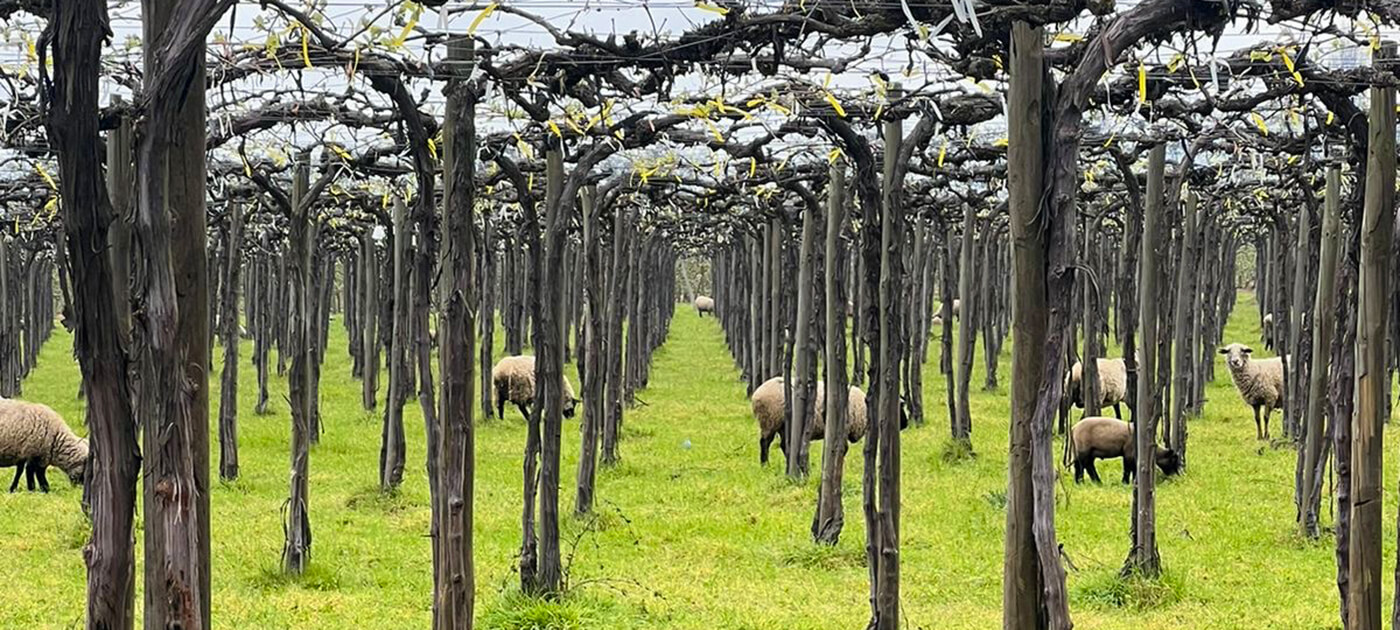
Our viticultural activity employs sustainable farming techniques, minimizing intervention in the natural development of the environment, using water resources responsibly, and preserving the natural ecosystems where our vines grow. Our commitment to environmental stewardship goes beyond the initial production stage—it extends throughout the entire value chain.
Our precision irrigation system, equipped with soil moisture sensors, maximizes efficiency by applying water accurately and at the right time.
A significant portion of the organic waste generated during harvest is reintegrated into our processes as natural fertilizer.
We generate our own clean energy through solar panels, covering our energy consumption.
We purify and reuse wastewater for irrigation, completing a fully sustainable water cycle.
We manufacture much of our machinery on-site at the vineyard, allowing us to optimize processes and minimize our carbon footprint.
DISTRIBUTION
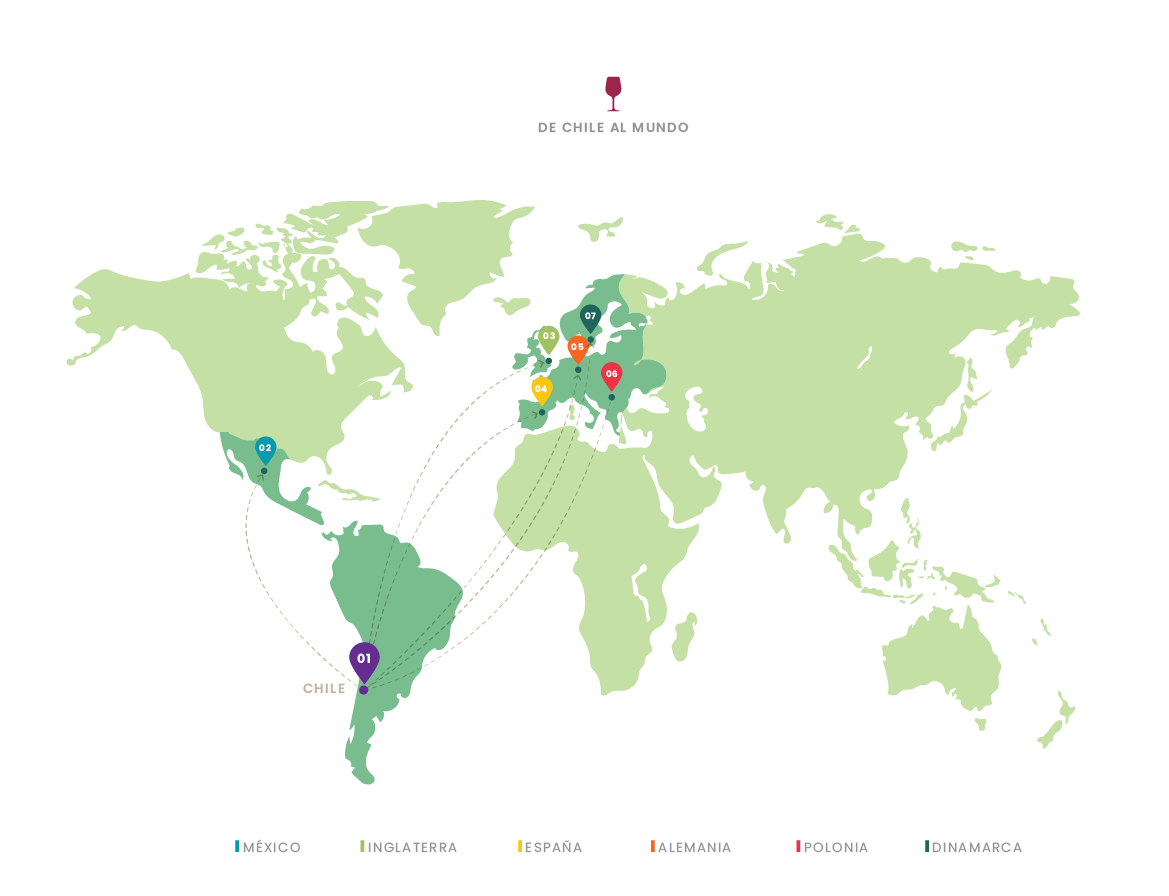
Over the past twenty years, we have focused on marketing our bulk wines internationally, reaching countries such as Germany, France, England, Poland, Spain, Mexico, Denmark, among others. Our philosophy is to continually improve while building long-term relationships with our clients, based on trust, and contributing to the production of wines for specific markets.
Contact
- Parcela 3 S/N Graneros, Chile,
- german@cruzdetriana.cl
- + 56 9 9743 4091
At Cruz de Triana, we value authentic conversations. Write to us— we’ll be happy to respond, share experiences, or assist you with your next purchase.
Get in Touch
Leave Us a Message